Are Expensive Skincare Products Better?
Updated: Aug 12
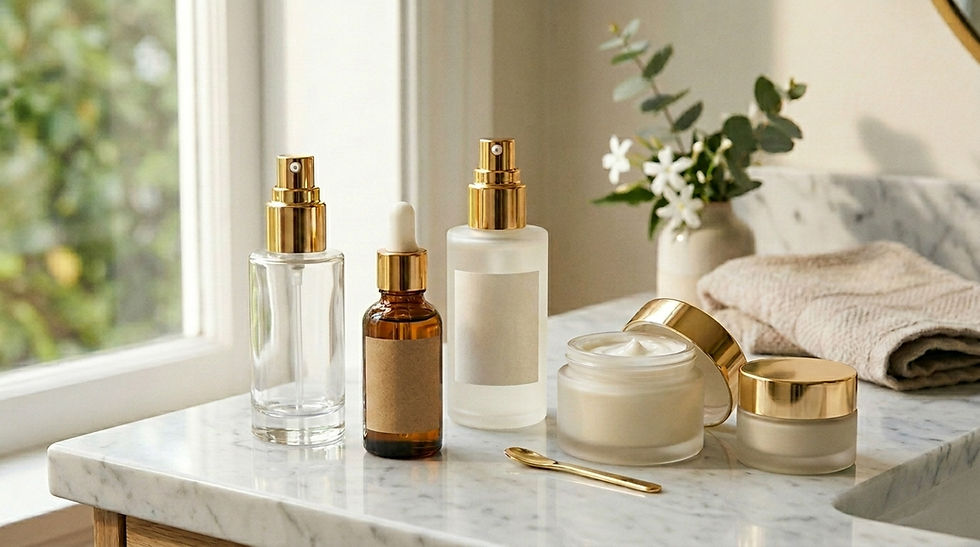
A £95 moisturiser can feel beautifully indulgent on a bathroom shelf. It may come in weighty glass, smell like a spa and promise a smoother, brighter, more rested-looking face by Monday. But if you are asking, are expensive skincare products better, the blunt answer is: not automatically.
Price can reflect genuinely excellent formulation, thoughtful packaging and years of testing. It can also reflect a famous name, an expensive campaign, a fancy jar and an ingredient story that sounds more impressive than it performs. I have seen £12 products with formulas I would happily recommend over options five times the price.
The good and bad news is that there is no single price point where skincare suddenly becomes effective. What matters is whether the product suits your skin, contains useful ingredients at sensible levels and is pleasant enough for you to use consistently.
Are expensive skincare products better for your skin?
Sometimes, yes. Premium skincare can be better when a brand has invested in formula stability, elegant textures or clinically supported ingredients that are difficult to work with. Retinaldehyde, vitamin C, peptides and certain sunscreen filters can require careful formulation. A cheaper product is not necessarily inferior, but there can be more room for error.
A good vitamin C serum is a fair example. Pure L-ascorbic acid is notoriously unstable. It needs the right pH, packaging and supporting ingredients to stay effective rather than oxidising in the bottle. That does not mean every pricey vitamin C serum is worth it, but a bargain formula in a clear dropper bottle should make you sceptical.
Likewise, people with very reactive skin may find that a more expensive fragrance-free moisturiser has a better texture and a more carefully designed formula. If it makes daily use easier and reduces irritation, paying more may be justified.
But price is not a measure of suitability. A rich, £100 cream can still clog acne-prone skin. A luxury face oil can still be too fragranced for rosacea. An expensive scrub can still over-exfoliate you. Your skin does not know what you spent.
What you are really paying for
When you buy skincare, you are paying for far more than the active ingredients. That is not inherently bad. The experience of using a product matters. But it helps to be honest about where your money is going.
You may be paying for beautiful packaging, a signature scent, a celebrity endorsement, retailer margins, import costs and a brand’s prestige. You may also be paying for better airless packaging, testing, ingredient sourcing, research and development, or a formula that feels far nicer than a basic alternative.
The tricky part is that these things are invisible from the price tag. A £70 serum may be carefully formulated and genuinely excellent. It may also be a basic humectant serum with a luxury fragrance and a persuasive story attached.
This is why I would never call a product “worth it” based only on how expensive it is. I look at the ingredient list, the packaging, the claims, the amount you get and, crucially, what the product is actually meant to do.
The skincare categories where spending more can make sense
There are a few categories where formulation quality can matter enough to consider spending more, provided the specific product holds up.
Sunscreen
Daily SPF is one area where I understand paying extra. The best sunscreen is the one you apply generously and willingly, not the cheap bottle you avoid because it stings your eyes, pills under make-up or leaves you looking ghostly. Premium formulas can offer lighter textures, better wear and more cosmetic elegance.
That said, the UK has plenty of affordable SPFs that are comfortable and reliable. High price does not guarantee higher protection. Choose a broad-spectrum SPF 30 or 50 from a reputable brand, then judge it on wear, comfort and whether you use enough of it.
Vitamin C and retinoids
These are ingredients where packaging and formulation have a real role. A vitamin C product that turns dark orange within weeks is unlikely to be money well spent, whatever the price. Retinoids also need sensible formulation to balance effectiveness with tolerability.
Still, do not confuse stronger with better. A lower-strength retinal or retinol product used steadily is likely to beat an aggressive formula that leaves your skin sore, flaky and unable to tolerate anything else.
Targeted treatments
If you are treating persistent pigmentation, acne or a compromised skin barrier, a more specialised product can be worthwhile. You may be paying for a better delivery system or a formula designed to work alongside other actives without causing unnecessary irritation.
This is where I would focus on the evidence behind the ingredient rather than a glamorous “complex” with a trademarked name. Niacinamide, azelaic acid, ceramides, glycerin and salicylic acid do not need a luxury price tag to work.
Where you can usually save your money
Cleansers are the obvious place to be sensible. They are on your face for less than a minute, then rinsed away. A cleanser should remove sunscreen, make-up and excess oil without leaving your skin tight or squeaky. You do not need gold flakes, collagen or a rare flower extract for that.
Basic moisturisers are another category where affordable products often do brilliantly. Glycerin, petrolatum, squalane, dimethicone, ceramides and fatty alcohols are not exciting marketing ingredients, but they can be extremely effective. CeraVe Moisturising Cream, The Ordinary Natural Moisturising Factors + HA and simple pharmacy moisturisers show that useful barrier support does not have to mean a luxury bill.
Face mists, sheet masks and most eye creams also deserve a reality check. They can be enjoyable, and I am not against buying skincare simply because it makes your evening feel nicer. But do not expect a £60 eye cream to erase genetic dark circles or a ten-minute mask to transform dehydrated skin long term.
The ingredient list is useful, but it is not the whole verdict
Ingredient lists are a valuable filter, not a crystal ball. They can tell you whether a product contains fragrance, drying alcohols, essential oils or ingredients you already know do not agree with you. They can help you spot useful ingredients and assess whether a brand’s claims look plausible.
They cannot tell you concentrations in most cases, how stable an ingredient is or whether the texture will suit your routine. They also cannot tell you if a product will sting your particular skin. That is why extreme ingredient-list fear can be just as unhelpful as buying based on a glossy advert.
For me, the best approach is to use the list to rule out obvious mismatches, then consider the product’s purpose and real-world performance. A formula does not need to be perfect on paper to be good. Equally, a formula packed with fashionable ingredients can still be irritating, sticky or useless for your needs.
A better way to decide what is worth spending on
Before buying a costly product, ask what gap it fills. If you already have a gentle cleanser, a moisturiser you like and an SPF you wear daily, will another hydrating serum change much? Possibly not. If you have struggled to find a sunscreen that does not break you out or a vitamin C serum that stays stable, a pricier option may solve a genuine problem.
Be particularly wary of vague promises such as “radiance”, “youthful glow” and “renewed skin”. They are not necessarily dishonest, but they are broad enough to mean almost anything. Look for a clear job: hydrate, reduce breakouts, support the barrier, improve the look of uneven tone or protect from UV exposure.
Then give the product a fair trial. Apart from immediate irritation, most skincare does not deliver a meaningful verdict in three days. Take a simple photo in the same light before you start, introduce one new active product at a time and use it consistently. That is less glamorous than a dramatic haul, but it is how you avoid confusing coincidence with results.
The honest verdict on luxury skincare
Expensive skincare is not a scam, and affordable skincare is not automatically basic or second-rate. Both categories contain excellent products, overhyped products and formulas that will be brilliant for one person but a poor match for another.
If a luxury moisturiser makes you look forward to your routine and fits comfortably within your budget, enjoy it without guilt. Skincare can be a small pleasure. Just do not let a high price persuade you that it is doing more than it is.
Spend where better formulation solves a problem you actually have. Save where the product’s job is simple. The most effective routine is rarely the most expensive one - it is the one you can afford, tolerate and use every day.

Comments